
Up: Glassmaking

Stained Glass
5 of 29
|
|
| |
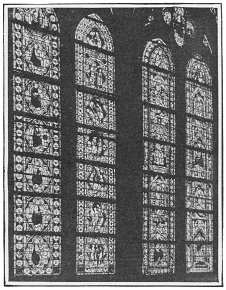
DETAIL OF THIRTEENTH-CENTURY WINDOW
Upper Church of San Francesco, Assisi, Italy
|
windows were made for the expression of personal delight, and as a
contribution to the adornment of public buildings.
One of the merits most remarkable and excellent
in the cathedral windows of the thirteenth century is seen in the harmony
existing between them and the buildings they were made to decorate. The
glass worker did not try to create an individual work complete in itself,
but rather, under the direction of the master of the whole, to unite his
work with that of the sculptor in the ornamentation of the monument. Not
only by a well chosen and harmonious color distribution did he illuminate
the interior of the church with a mysterious and splendid light giving
charm to the severe grandeur of the architecture, but he, like the sculptor,
aimed to present the fundamental truths of religion.
The stained-glass window picture of the thirteenth
century stood in the position of instructor to the people. The window,
like the cathedral
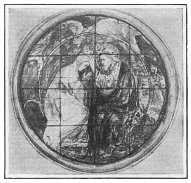
After a color sketch by Ida J. Burgess
"THE CORONATION OF THE VIRGIN"
In the Duomo (Cathedral), Florence, Italy.
Designed by Donatello, executed by
Francesco del Boni, 1442
|
it was made for, did not appeal to one class more than to another. The
subject represented was understood by the intelligent and explained to
the ignorant; its history and symbolism were perfectly understood and
talked over among the people, as the current news of the press is
discussed today.
Everything that was deemed of real importance to
humanity in the thirteenth century was pictured in stone or glass. The
Cathedral of Chartres (shartr)
remains to this day a visible expression of the mind of the thirteenth
century. The most ancient windows still existing
|
|